5-Piece Stepping Stones for Kids: Balance Play Ideas
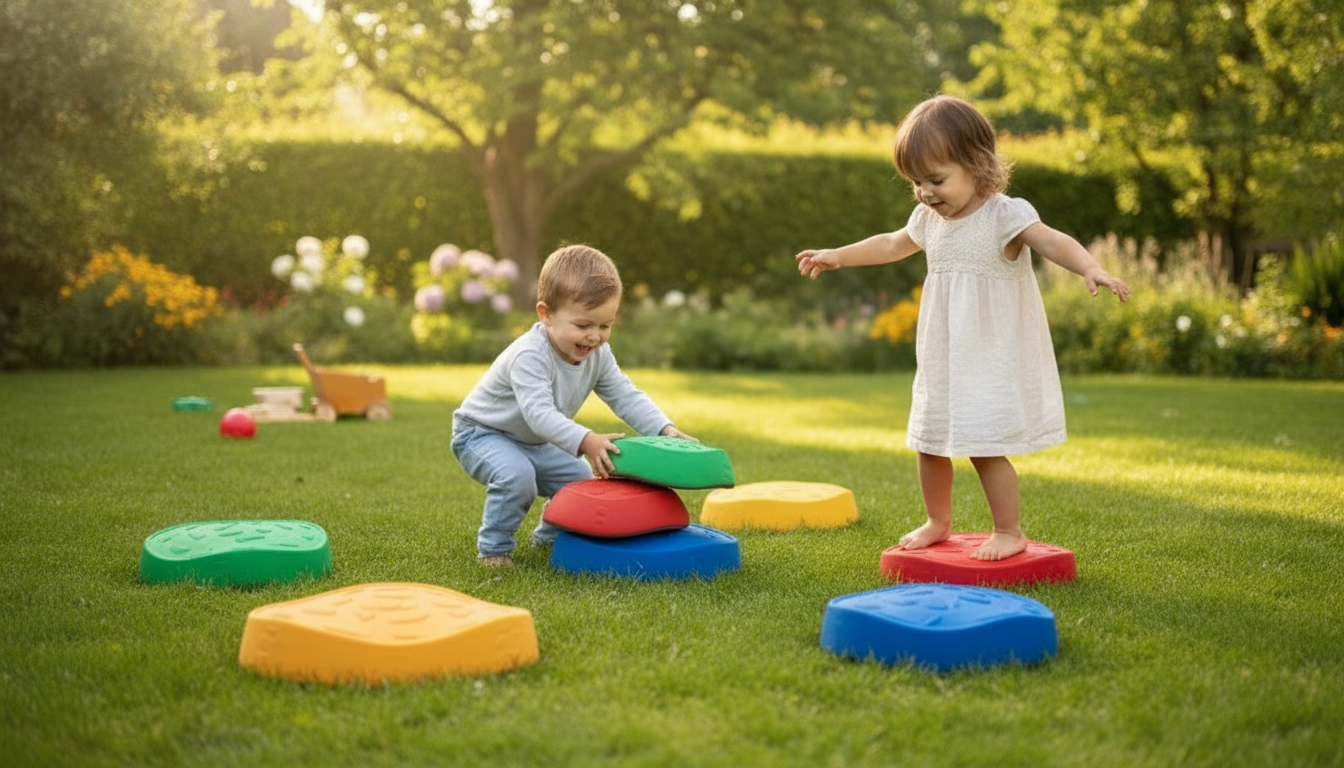
5-Piece Balance Stepping Stones for Kids: Indoor & Outdoor Movement Play
Balance stepping stones turn everyday play into a simple obstacle course that encourages coordination, body awareness, and confident movement. A 5-piece set is especially handy for quick setups in a playroom, classroom corner, or backyard—enough pieces to build fun pathways without taking over the whole space. Below are the skills stepping stones support, what to expect from a 5-piece set, how to set it up safely, and easy game ideas kids will ask to repeat.
What Balance Stepping Stones Help Kids Practice
Stepping stones look like play, but each “island hop” builds movement skills kids use everywhere—from climbing stairs to navigating playground equipment.
- Balance and stability: stepping between uneven “islands” challenges core control and single-leg balance.
- Coordination and motor planning: deciding where to place feet and how far to step builds planning skills.
- Spatial awareness: kids learn distance, direction changes, and body positioning.
- Confidence through repetition: short, repeatable challenges help kids master new movement patterns.
- Active play breaks: quick courses can reset focus between seated activities.
For a broader view of early development and why movement-based play matters, see the CDC developmental milestones and the American Academy of Pediatrics’ perspective on the importance of play.
What’s Included in the 5-Piece Set
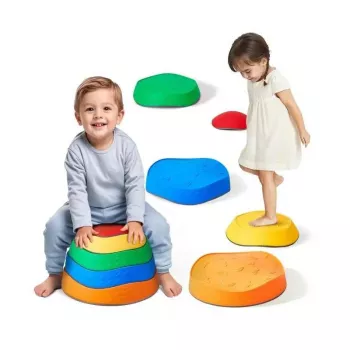
A 5-piece balance stepping stone set is a practical “starter size” that still offers lots of variety. It’s easy to store, quick to lay out for a short movement station, and flexible enough to combine with tape lines, cones, or foam mats when kids are ready for more.
- A compact set size that’s easy to store and quick to set up for short courses.
- Works well as a starter set for home play, therapy-style movement games, or classroom stations.
- Suitable for mixing with other floor markers (tape lines, cones, foam mats) to extend the course.
Quick snapshot: why a 5-piece set works well at home
| Feature | Why it matters | Simple tip |
|---|---|---|
| 5 separate stones | Enough pieces for multiple paths without taking up much space | Start with a straight line, then add zig-zags |
| Portable size | Easy to move between rooms or take to a yard/park | Store in a bin so setup stays fast |
| Course flexibility | Adjusts difficulty by changing distance and angles | Increase spacing gradually as skills improve |
Safe Setup for Indoor and Outdoor Play
A great setup makes the course feel “doable” while still challenging. A few small tweaks also help prevent slips and awkward landings.
- Choose the right surface: flat floors or level ground reduce wobble and unexpected slips.
- Create a clear play zone: remove toys, cords, and sharp-edged furniture from the landing area.
- Start low and close: keep stones nearer together for beginners; widen spacing as confidence grows.
- Add “safe exits”: place a rug, mat, or soft landing area at the start and finish when indoors.
- Supervise active play: especially for toddlers or when adding jumping challenges.
Outdoor tip: if you’re on grass, choose a level patch and avoid holes or uneven areas that could twist an ankle on a landing. Indoor tip: wipe soles (and the stones) before bringing them onto smooth flooring.
Games and Challenges Using 5 Stones
With five stones, you can create short “rounds” that feel like a game, not a drill. Keep turns quick and repeatable so kids get lots of practice without long waits.
- Color-call steps: call out a target stone and have kids step to it without touching the floor.
- Animal walk course: bear crawl to the first stone, stand to balance on the next, then hop to the finish.
- Freeze balance: pause for 3–10 seconds on each stone (shorter holds for younger kids).
- Numbered path: label stones 1–5 and change the order (1-3-5-2-4) to practice memory and planning.
- Partner course: one child sets the spacing, the other completes the course; then switch roles.
To keep it fresh, change just one variable per round: direction (forward/backward), speed (slow-motion steps), or “rules” (quiet feet, soft landings, hands on hips).
Adjusting Difficulty by Age and Skill Level
The same five stones can work for a wide range of ages when the spacing, direction, and rules match the child’s current control.
Care, Storage, and Long-Term Use
Product Options (In Stock)
- 5-Piece Balance Stepping Stones for Kids ($32.51) — compact obstacle-course play for balance, coordination drills, and movement breaks.
- 3-in-1 Apple Charging Station for iPhone, AirPods & Apple Watch ($33.51) — a tidy way to keep devices charged while play areas stay uncluttered.
- Portable 8/12 Speed Cordless Handheld Blender Mixer ($46.51) — convenient for quick snacks and smoothies after active play.
FAQ
Are balance stepping stones safe for toddlers?
They can be safe with close spacing, a flat surface, and active supervision. Start with careful stepping (no jumping) until the child shows steady, controlled landings and can pause briefly without wobbling.
Can stepping stones be used indoors without damaging floors?
Yes, when the stones are clean and used on a flat surface. Wipe off dirt or grit after outdoor play, and consider placing them on a rug or mat if you’re using them on smooth flooring.
How far apart should stepping stones be for kids?
Begin at the child’s comfortable step length—where they can step across and land with control—then increase spacing gradually. Adjust based on age and skill, and keep the distance close enough that landings stay quiet and stable.







Leave a comment