Cactus Cat Tree Tower Guide: Scratch, Climb, Lounge
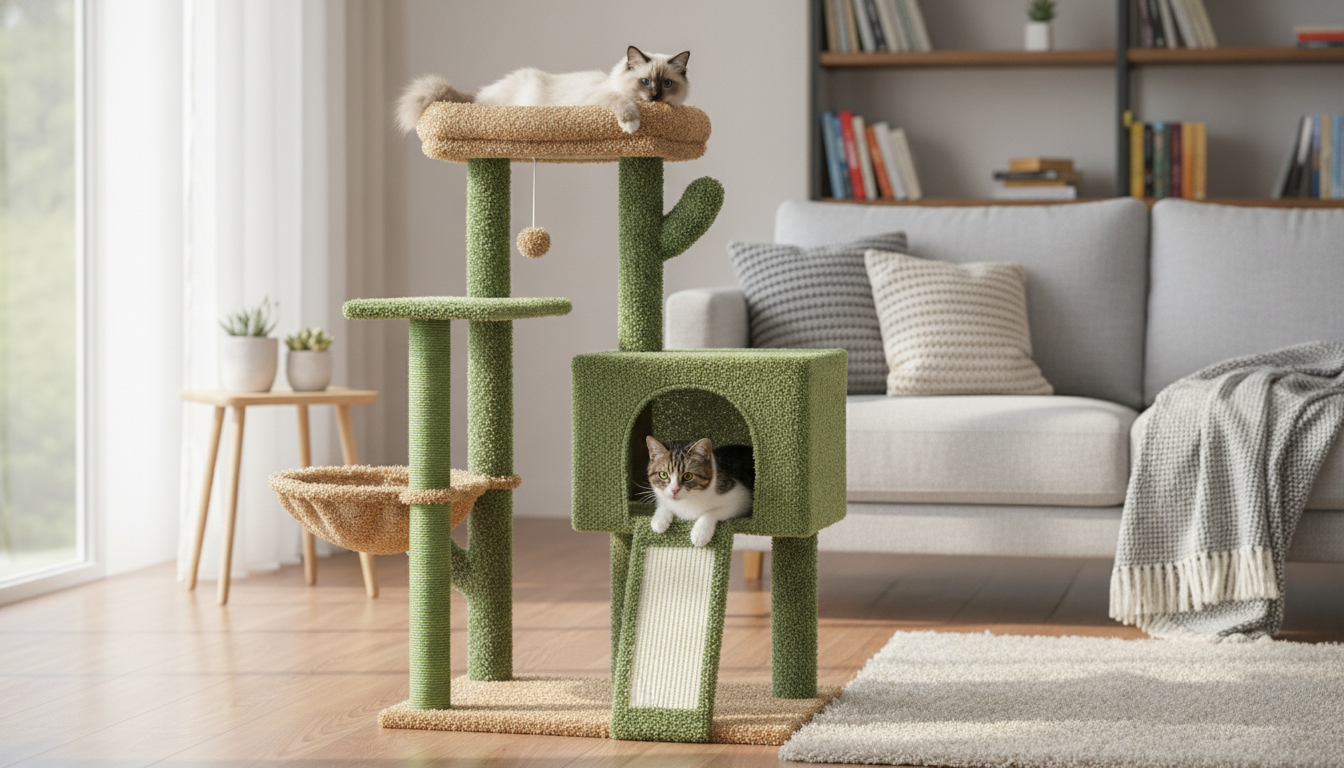
Cactus Cat Tree Tower: A Playful Upgrade for Climbing, Scratching, and Lounging
A cactus-themed cat tree tower adds vertical space for climbing, scratching, and lounging while doubling as a playful décor piece. If your cat loves high vantage points, your sofa corners have become a “scratch zone,” or your home needs enrichment without adding clutter, a cactus-style tower can be a smart, style-friendly solution. Below is what it adds to a room, what features matter most, and how to set it up so cats actually choose it every day.
What a cactus-style tower adds to a home
- Vertical territory that helps cats feel secure, especially in busy rooms where they prefer to observe from above.
- Dedicated scratching surfaces to redirect claws away from chair arms and carpeted stairs.
- Multiple activity zones (rest, play, scratch) in one footprint—useful for apartments and multipurpose rooms.
- Whimsical cactus look that blends well with boho, modern, or playful interiors without screaming “pet furniture.”
Daily benefits for cats
- Climbing and perching support natural behaviors and gentle exercise, especially for indoor-only cats.
- Scratching helps with claw maintenance and stress relief. International Cat Care explains that scratching is a normal, important behavior—not “misbehavior.” Learn more about scratching behavior.
- Elevated resting spots can reduce conflict in multi-cat homes by adding “lanes” and separate hangout zones.
- A consistent nap place can improve routine and confidence for shy cats—especially if it’s placed near the household’s calm, predictable areas.
Feature checklist for choosing a tower that gets used
Cute design is a bonus, but the cats decide based on feel, stability, and convenience. Use this checklist to avoid the classic “ignored cat tree” scenario.
- Stable base: A wider, heavier base reduces wobble during jumps and energetic play.
- Scratching material: Look for durable wrap (often sisal) and enough vertical run for a full-body stretch.
- Platforms and perches: Staggered levels help cats climb without big leaps—important for kittens, seniors, and cautious cats.
- Cozy zones: A perch, condo, or hammock-style spot encourages longer “hang time,” not just quick drive-bys.
- Easy-clean surfaces: Fabrics that vacuum well and don’t trap too much fur keep the tower appealing.
- Assembly: Clearly labeled parts and pre-drilled holes can save time and reduce misalignment wobble.
Quick tower evaluation table
| What to check | Why it matters | What to look for |
|---|---|---|
| Base stability | Prevents tipping and wobble | Wide footprint; minimal sway when lightly pushed |
| Scratch zones | Encourages healthy scratching habits | Tall scratch area; sturdy wrap; multiple scratch points if possible |
| Step spacing | Makes climbing accessible | Platforms arranged like stairs rather than one big jump |
| Top perch comfort | Cats often choose the highest spot | Adequate size for your cat to curl up; soft edge or rim |
| Materials & finishing | Durability and safety | No sharp staples; smooth edges; solid posts |
| Cleaning effort | Keeps the tower usable long-term | Vacuum-friendly fabric; spots wipe easily; removable cushions if included |
Safety and stability setup
- Start with the floor: Place the tower on a flat, non-slippery surface. If you have hardwood or tile, add a grippy mat underneath.
- Give it “zoomies clearance”: Position away from fragile décor and narrow shelves that could get bumped during play.
- Consider anchoring: If the tower is tall or your cats are powerful jumpers, wall anchoring can add peace of mind.
- Re-tighten hardware: Check fasteners after the first week and monthly afterward; normal climbing can loosen bolts over time.
- Match the cat’s mobility: For kittens or seniors, prioritize lower step-ups and keep landing areas clear.
Best placement for a cactus tower (so cats choose it over furniture)
- Near a window: Natural “cat TV” (birds, people, breezes) boosts perch use.
- Close to the social area: Many cats prefer resting where people are, not in a back room.
- Near existing scratch targets: If a couch corner is the current favorite, place the tower next to that spot to redirect behavior.
- Avoid blocking pathways: Cats like to move around the tower, not squeeze past it.
- Plan for multiple cats: Add a second scratch spot elsewhere to reduce competition and “guarding.” For more enrichment ideas, the ASPCA has a helpful overview of environmental enrichment. ASPCA enrichment guidance.
How to encourage scratching and climbing
Care, cleaning, and keeping it looking sharp
Who it suits best
Cactus Cat Tree Tower option
A themed tower can make enrichment feel like part of the room design rather than an afterthought. If you’re ready to add a cactus-inspired climb-and-scratch zone, you can See the Cactus Cat Tree Tower and review current pricing, photos, and availability before ordering.
More in-stock picks
- 3-in-1 Apple Charging Station for iPhone, AirPods & Apple Watch
- Portable 8/12 Speed Cordless Handheld Blender Mixer
FAQ
How long does it take for a cat to start using a new cat tree?
Many cats warm up within a few days, but it can take a couple of weeks. Speed things up by placing it near a window or favorite resting area and rewarding any interaction, even sniffing and brief pawing.
How can a cat tree be made more stable?
Assemble it on a flat surface, tighten all hardware, and use a non-slip mat underneath. For tall towers or high-energy cats, placing it against a wall or anchoring it can significantly reduce wobble.
What is the easiest way to clean a fabric-covered cat tower?
Vacuum regularly with a brush attachment and use a lint roller for quick touchups. Spot-clean with a pet-safe cleaner, and wash removable cushions only according to the care instructions if they’re included.









Leave a comment