Mindful Dating Checklist: Spot Red Flags & Hold Boundaries

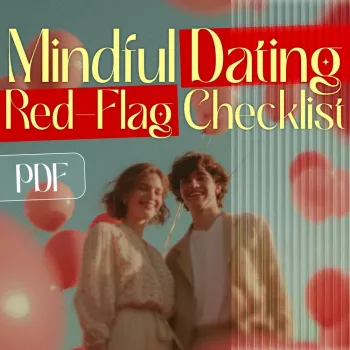
Mindful Dating Red-Flag Checklist: A Printable Guide for Emotional Safety and Clear Boundaries
Dating can be exciting and confusing at the same time—especially when chemistry makes it easy to overlook uncomfortable moments. A mindful approach helps slow things down, notice patterns, and protect emotional safety without becoming hypervigilant. This guide offers a practical framework to spot concerning behaviors early, name your needs, and respond with boundaries that match your values.
What “mindful dating” looks like in real life
Mindful dating isn’t about assuming the worst. It’s about staying connected to your inner signals and watching whether someone’s behavior stays respectful over time—especially when things get more intimate, more frequent, or more emotionally charged.
- Pacing connection: letting consistency build trust over time rather than rushing intimacy.
- Noticing body signals: tension, dread, confusion, and pressure are useful data—not something to override.
- Separating words from patterns: prioritizing follow-through, accountability, and respectful behavior.
- Staying connected to personal standards: needs, limits, and dealbreakers are defined before attachment deepens.
- Choosing curiosity over self-blame: evaluating compatibility instead of trying to earn basic respect.
Why a checklist supports emotional safety (without turning dating into an interrogation)
A checklist works best as a private grounding tool: quick notes before and after dates, not a script you perform in real time. It helps keep clarity available when attraction, hope, or anxiety get loud.
- Creates a neutral reference point when emotions and attraction are loud.
- Reduces rumination by turning vague discomfort into specific observations.
- Helps track frequency and escalation (a single awkward moment vs. a repeating pattern).
- Supports boundary follow-through by pairing “what happened” with “what to do next.”
- Encourages self-trust: decisions are based on evidence and values, not just hope.
Early red flags to watch for (and what they often signal)
Red flags aren’t about labeling someone as “bad.” They’re about identifying behaviors that reduce emotional safety, predict future disrespect, or create a power imbalance. If something feels off, consider it information—not a challenge to prove you’re “chill.”
- Inconsistent communication: hot-and-cold patterns, disappearing, or sudden intensity after distance.
- Boundary testing: pushing for more time, sex, information, or commitment than feels comfortable.
- Disrespect disguised as humor: teasing that stings, “jokes” about your appearance, values, or sensitivity.
- Control signals: monitoring your time, questioning outfits, discouraging friends, or creating jealousy.
- Accountability gaps: excuses, blame-shifting, refusal to apologize, or anger when confronted.
- Values mismatch in action: claims to want a relationship while behaving secretively or noncommittally.
Quick-reference: flags, meanings, and boundary responses
| Flag to note | What it can look like | Why it matters | A boundary response |
|---|---|---|---|
| Pressure to move fast | Love-bombing, intense future talk early, rushing exclusivity | Can bypass trust-building and hide incompatibility | “I move slower. If that doesn’t work for you, it’s okay to step back.” |
| Dismissive reactions | “You’re overreacting,” eye-rolling, minimizing feelings | Undermines emotional safety and communication | “My feelings aren’t up for debate. If you can’t discuss respectfully, I’m done.” |
| Inconsistent availability | Frequent cancellations, vague plans, last-minute invites only | Signals low investment or poor reliability | “I’m looking for consistency. Let me know when you can plan ahead.” |
| Jealousy framing | Accusations, guilt for having friends, “testing” loyalty | Often escalates into control | “I won’t justify normal friendships. If you can’t trust, we’re not a fit.” |
| Boundary pushing | Ignoring a “no,” negotiating limits, repeated unwanted topics | Predicts future coercion or disrespect | “I said no. If it comes up again, I’ll end the date.” |
If certain behaviors resemble emotional manipulation (like rewriting events or making you doubt your memory), it can help to learn the pattern and protect your reality. The American Psychological Association’s overview of gaslighting explains how it impacts trust and decision-making: https://www.apa.org/topics/relationships/gaslighting.
Green flags that balance the picture
Mindful dating includes evidence of safety and steadiness—signs that you can relax without losing yourself. Green flags don’t mean “perfect.” They mean repair, respect, and consistency.
How to use the printable checklist on dates (before, during, after)
Boundary scripts that stay calm and clear
When to take a step back immediately
For additional guidance on warning signs and support options, these resources can help: National Domestic Violence Hotline — Relationship Warning Signs and RAINN — Safety Planning.
A simple tool to keep you grounded
If you want a structured, easy way to slow down and check in with yourself, the Mindful Dating Red-Flag Checklist (Printable) is designed for quick notes, pattern tracking, and boundary clarity—especially after confusing or draining dating experiences.
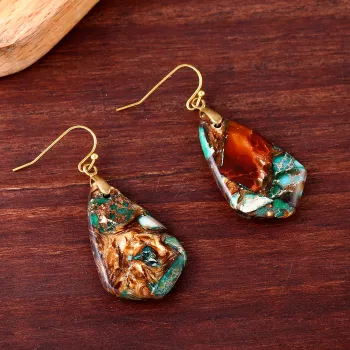
For small confidence boosts that support a grounded dating mindset, consider pairing your reset routine with something that helps you feel like yourself: Bohemian Hypoallergenic Imperial Jasper Stone Drop Earrings for Women for an easy outfit upgrade, or a calming screen-free wind-down like the 3D Wooden Racing Car Puzzle Kit between dates.
FAQ
How many red flags are “enough” to stop dating someone?
One severe safety issue (threats, coercion, intimidation, stalking) is enough to step away immediately. For less extreme concerns, repeated boundary violations, contempt, or ongoing confusion are strong stop signs—especially when repair never happens.
What if someone reacts badly when a boundary is stated?
The reaction is information: a respectful partner may be disappointed but stays kind and steady. Anger, guilt-tripping, mocking, or escalation suggests incompatibility or potential risk, and it’s appropriate to end the interaction and prioritize safety.
Can a checklist make dating feel anxious?
It can if it’s used like a constant scorecard, so keep it brief and behavior-focused (before/after dates) and balance it with green flags. The goal is to reduce overthinking by naming what actually happened, not to analyze every awkward moment.









Leave a comment