Modern Etiquette for Texts, Social Media, and RSVPs

Modern Etiquette, Updated for Real Life
Good manners still matter—especially when most communication happens through screens, fast replies, and group chats. A modern etiquette refresh can reduce awkward moments, protect relationships, and help messages land the way they were intended. The goal isn’t perfection or “old rules,” but simple consideration: clarity, respect, and timing.
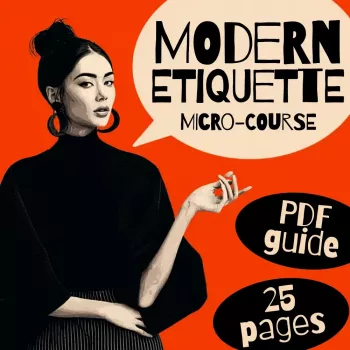
For a practical reset you can actually use day-to-day, a printable reference helps. The Modern Etiquette Micro-Course | Printable Digital Etiquette Guide is designed as quick micro-lessons you can skim before you send, post, or RSVP.
What “modern etiquette” actually covers today
Modern etiquette is less about rigid formality and more about reducing friction in everyday interactions—online and offline. Most “etiquette problems” now happen in digital spaces where tone is easy to misread and messages travel fast.
- Etiquette as consideration: prioritizing clarity, respect, and reasonable timing.
- Digital-first realities: texts, DMs, voice notes, reaction emojis, and group threads.
- Social media pressure points: public comments, tagging, sharing, and privacy choices.
- Event communication basics: invitations, RSVPs, follow-ups, and thank-yous.
- Everyday politeness: punctuality, introductions, and gratitude—small signals that build trust.
For deeper background on timeless etiquette principles that still apply, the Emily Post Institute is a helpful authority, while Debrett’s Modern Manners offers a modern perspective on courtesy and social expectations.
Texting that sounds like a real person (without overexplaining)
Texting etiquette is mostly about two things: timing and tone. A short message can be efficient—or it can read as cold. And a delayed reply can be harmless—or it can quietly derail plans.
Timing: when “soon” matters
- If you’re coordinating logistics (meeting up, a deadline, travel), reply as quickly as practical—or acknowledge with a time you’ll respond.
- If it’s casual conversation, a later reply is usually fine; the polite move is not leaving someone hanging on time-sensitive questions.
Tone checks that prevent misunderstandings
- If your message is only a few words, add a touch of context when needed (a brief “Thanks!” or “Sounds good”).
- Avoid sarcasm in text when there’s any chance it will be misread.
- When a topic feels emotionally loaded, consider moving to a call.
When to switch from text to a call
- Conflict or tension (especially if messages are getting shorter or sharper).
- Breakups, bad news, or sensitive feedback.
- Complicated logistics with multiple moving parts.
Quick texting fixes for common situations
| Situation | Better approach | Example phrasing |
|---|---|---|
| Need an answer | Ask with a clear deadline and an easy out | “Could you confirm by Thursday? No worries if you can’t make it.” |
| Running late | Send an ETA early; apologize once; update if it changes | “Running 10 minutes behind—ETA 6:10. Sorry for the delay.” |
| Missed message | Acknowledge and respond without excuses | “Just seeing this—thanks for the note. Here’s my answer…” |
| Disagreement | Pause; avoid sarcasm; move to a call if needed | “I may be reading this wrong—can we hop on a quick call?” |
Social media manners: boundaries, credit, and public vs. private
Social platforms blur the line between personal and public. A useful rule: if something could make a person feel exposed, ask first or move it to private.
Social media is now a major part of daily communication for many adults; the Pew Research Center’s Social Media Fact Sheet offers helpful context on how widespread these platforms are and why clear norms matter.
RSVPs made easy: responding, changing plans, plus-ones, and guests
Everyday politeness that improves relationships fast
How the printable micro-course fits into busy routines
Modern Etiquette Micro-Course (Printable Digital Guide): what it helps with
The Modern Etiquette Micro-Course | Printable Digital Etiquette Guide focuses on the scenarios that create the most modern awkwardness: unclear texts, social media oversharing, and messy RSVPs—plus the everyday manners that keep relationships strong.
At-a-glance: etiquette areas covered
| Area | Common slip-ups | Better habit to practice |
|---|---|---|
| Texting | Vague replies, late updates, reactive tone | Use clear timing, one clean apology, and confirm next steps |
| Social media | Over-sharing, unasked tagging, public corrections | Ask first, credit creators, move sensitive feedback to private channels |
| RSVPs | No response, last-minute changes, unclear guest counts | Respond promptly, notify early, confirm names and numbers |
| Everyday manners | Interrupting, forgetting thanks, unclear requests | Listen fully, close loops, and ask with respect |
Thoughtful add-ons for social moments
- Bohemian Hypoallergenic Imperial Jasper Stone Drop Earrings for Women can work as a simple thank-you gift when someone hosts or helps you out.
- Portable 8/12 Speed Cordless Handheld Blender Mixer is handy for entertaining basics (quick drinks, sauces, or small-batch prep) when you’re trying to make hosting smoother and more relaxed.
FAQ
Is a micro-course enough to improve etiquette quickly?
Yes—small, repeatable habits create fast improvement, especially around reply timing, clearer RSVPs, and social media boundaries. Printable pages help because you can check them in real situations instead of trying to remember rules later.
What should someone do if they forgot to RSVP or replied late?
Send a brief apology, ask if it’s still possible to attend, and accept the host’s answer without pushing. For example: “I’m sorry I missed the RSVP deadline—if it’s still possible to join, I’d love to, but I understand if it’s too late.”
When is it better to call instead of texting?
Call when the topic is sensitive (conflict, emotional news, feedback) or when logistics are complicated and likely to be misread. A respectful transition is: “This might be easier to talk through—are you free for a quick call?”











Leave a comment