Portable Chainsaw Mill Guide for Straight, Even Boards
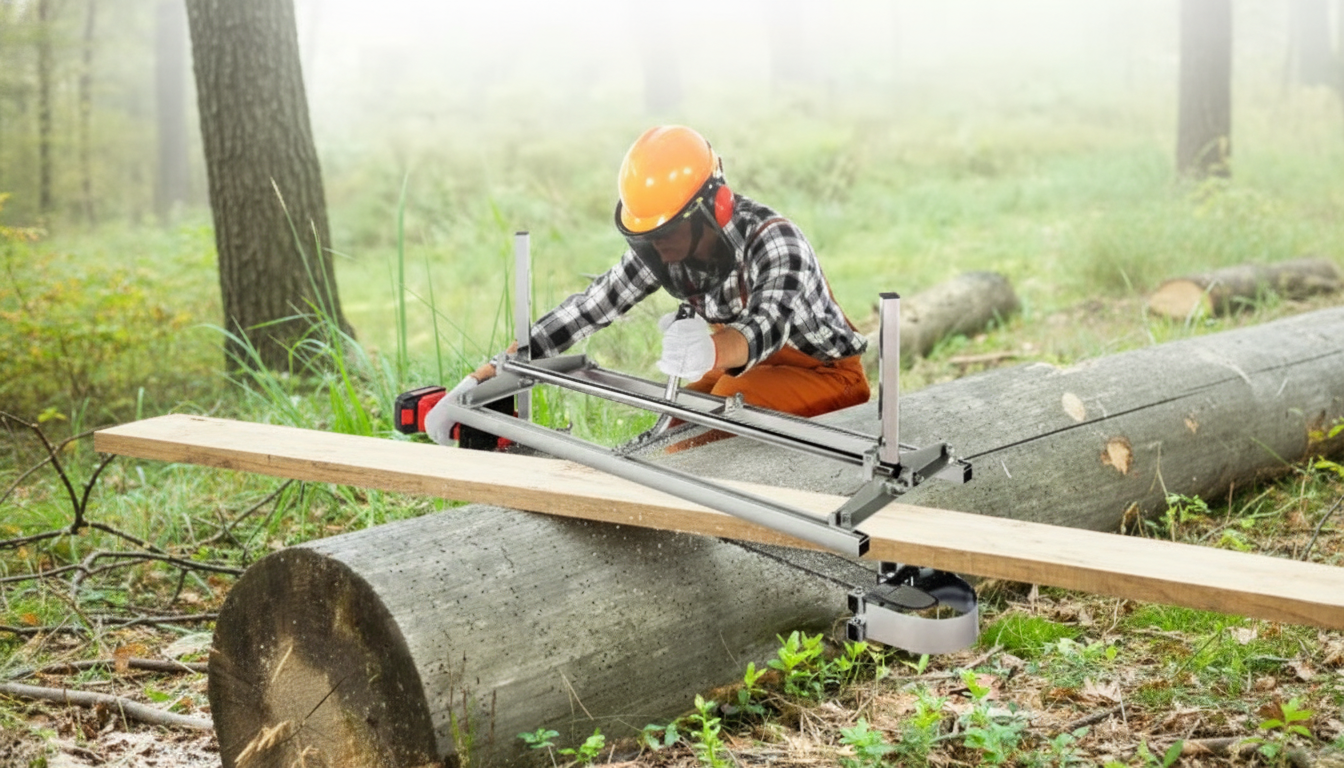
Portable Chainsaw Mill: Adjustable Guide for Straight, Consistent Lumber Cuts
A portable chainsaw mill turns a standard chainsaw into a practical, on-site milling setup for converting logs into boards and slabs. With an adjustable guide, the focus shifts from rough cutting to repeatable thickness, straighter passes, and better material yield—especially when working far from a full-size sawmill.
What a Portable Chainsaw Mill Does (and When It Makes Sense)
A chainsaw mill is essentially a guided frame that rides along a log while your chainsaw bar makes the cut. Instead of freehanding slabs (where small shifts in angle quickly become big variations in thickness), the mill helps keep the bar traveling in a controlled plane.
- Converts logs into usable boards and slabs using a chainsaw and a guided frame.
- Useful for storm-fallen trees, land clearing, homestead projects, and custom one-off lumber.
- Helps produce consistent thickness when the guide is properly set and the first cut is well established.
- Works best when paired with a sharp ripping-style chain and a stable log setup.
It’s a strong fit when moving logs is the problem—tight access, remote property, steep terrain, or simply a single log that isn’t worth hauling to a mill. For frequent, high-volume production, a dedicated mill still wins on speed and finish, but a portable setup can shine for occasional milling and specialty sizes.
Key Parts That Affect Accuracy
Straight boards start with straight mechanics. Even a powerful saw can’t compensate for flex, sloppy clamps, or a first pass that isn’t truly flat.
- Adjustable height rails: set the target thickness and keep the bar traveling consistently across the log.
- Rigid frame and clamps: reduce flex that can cause tapered or wavy cuts, especially on longer bars.
- Reference surface for the first pass: a ladder, straight plank, or guide rail establishes a flat face to work from.
- Consistent feed pressure: a steady push reduces chatter marks and helps the chain cut evenly.
If cuts are wandering, it’s often a combination issue: chain sharpness, bar condition, inconsistent feed, and a log that’s shifting or binding mid-cut.
Setup Basics for Straight Cuts
A careful setup is where most “accuracy” is won. The goal is to prevent the log from moving, give the mill a true reference for the first pass, and lock in a thickness setting that’s even on both sides.
- Secure the log: cribbing or wedges prevent rolling and reduce pinch risk.
- Create a straight first cut: fasten a ladder or straight rail to the log as a reference.
- Set thickness carefully: measure both sides of the mill before tightening to avoid uneven boards.
- Check bar condition: a worn bar can wander; keep rails and bar aligned.
- Plan the cut sequence: remove slabs first, then mill boards from the flattest reference face.
Quick Setup Checklist for More Consistent Boards
| Step | What to Do | Why It Matters |
|---|---|---|
| Stabilize the log | Use supports/wedges; eliminate rocking | Reduces binding and uneven thickness |
| Attach a straight reference | Secure a ladder/straight beam for the first pass | Creates a flat face to reference all later cuts |
| Set mill height | Measure left and right sides before tightening | Prevents taper and mismatched thickness |
| Verify chain sharpness | Use a sharp chain suited for ripping | Improves finish and lowers strain |
| Clear a safe work zone | Stable footing; keep helpers out of the line of cut | Reduces kickback and trip hazards |
Using the Adjustable Guide for Repeatable Thickness
Once you’ve established one flat face, the adjustable guide becomes the “repeatability” tool. The key is to treat the height setting like a measurement instrument: set it evenly, lock it down, and verify output with real measurements.
- Start with conservative passes: thinner cuts can be easier to control and less stressful on the saw.
- Re-check adjustments between cuts: vibration can loosen hardware if not fully tightened.
- Measure real output: wood movement, bark thickness, and chain kerf can change final dimensions.
- Leave extra for drying and planing: cut slightly oversized if boards will be surfaced later.
A practical workflow is to mill slabs off the outside first, then “dial in” your board thickness from the clean reference face. If you want finished 1-inch boards after drying and planing, cutting a little heavy from the start can prevent disappointment later.
Safety and Work Practices
Milling is a sustained, high-load cut. That means more heat, more fatigue, and more opportunity for binding—so safety habits matter as much as technique.
For additional safety guidance, review OSHA’s overview of chainsaw hazards and precautions and the USDA Forest Service’s chainsaw safety resources: OSHA — Chainsaws (Hand and Portable Powered Tools) and USDA Forest Service — Chainsaw Safety.
Care, Storage, and Long-Term Performance
Product Option: Portable Chainsaw Mill – Adjustable Sawmill Guide
Available here:
Portable Chainsaw Mill – Adjustable Sawmill Guide for Precise Wood Cutting.
More In-Stock Picks
FAQ
What is needed for the first cut with a chainsaw mill?
You’ll need a straight reference (like a ladder or rigid rail) secured firmly to the log so the mill has a flat, true track for the first pass. Stabilize the log with cribbing or wedges, and use wedges in the cut as needed to reduce pinching.
How does an adjustable chainsaw mill help with precise thickness?
The adjustable rails let you set a target board thickness and repeat it across multiple passes from a flat reference face. Measuring both sides before tightening and re-checking after vibration helps keep thickness even from edge to edge.
Can a regular chainsaw chain be used for milling?
A standard chain can cut wood, but a sharp chain suited for ripping usually improves smoothness and efficiency during long cuts. Keeping the chain sharp and the bar in good condition also helps reduce wandering and uneven boards.










Leave a comment